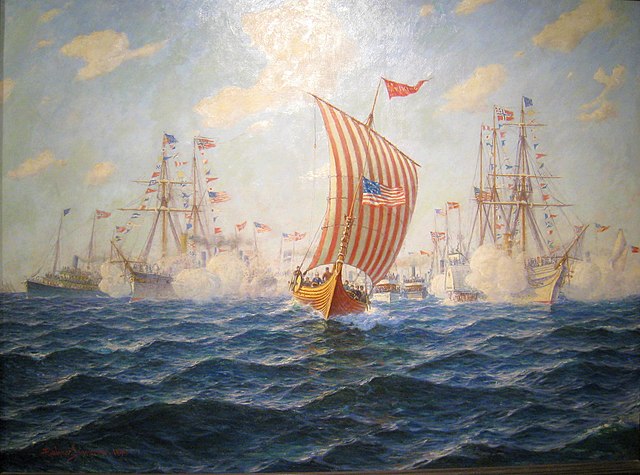
Picture a long, sleek, dragon-headed ship, not a modern yacht or even a 19th-century schooner, but a Viking longship, hand-built with axes and wooden pegs, its sides smeared with tar, its sail billowing like something out of a Norse myth. Now imagine it sailing, not in a fjord or a reenactment fair, but across the actual Atlantic Ocean.
That happened.
In 1893.
Because one stubborn Norwegian decided to prove that the Vikings weren’t just good at raiding monasteries, they could’ve crossed oceans. On purpose. Long before Columbus even borrowed a boat.
Magnus Andersen: Viking Soul, Newspaper Job
So, who was this guy?
Magnus Andersen wasn’t a historian or a professor or a cosplay enthusiast. He was a newspaper editor and ship captain from Kristiania (now Oslo). The kind of person who spends too much time around printing presses and sailing vessels and gets ideas that sound like jokes until they become reality. He believed, deeply, that Viking ships were not only seaworthy but ocean-worthy, and that the Norse people had the tools and the guts to make it to North America long before Europeans were wearing pants with buttons.
This wasn’t just some wild patriotic hunch. In 1880, archaeologists in Norway unearthed the Gokstad ship, an almost fully intact Viking vessel buried in a mound near Sandefjord. And it changed everything. The craftsmanship was next-level. Long, light, fast, and flexible, it looked less like a crude raft and more like a Formula One car made of oak. The ship had been buried around 900 CE as part of a chieftain’s grave, preserved in blue clay that kept it remarkably intact for nearly a thousand years.
Andersen saw it and went, Okay. Let’s prove it.
Not in theory. Not in a paper. But by actually sailing one across the Atlantic. The timing was perfect too. Chicago was hosting the World’s Columbian Exposition in 1893, celebrating the 400th anniversary of Columbus reaching the Americas. What better way to crash that party than showing up in a Viking ship to remind everyone who actually got there first?
Building the Viking: Not a Museum Piece, a Machine
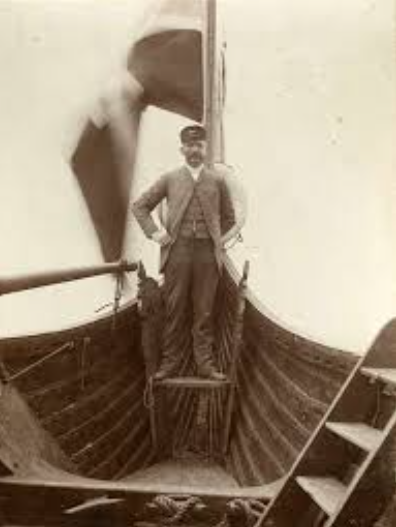
Andersen wasn’t content to just model the ship. He built a full-scale, functional replica of the Gokstad vessel, using only the materials and methods that would’ve been available in the 9th century. No motors. No steel hull. No shortcuts. The construction took place at a shipyard in Sandefjord, and master shipbuilder Ole Evenrud oversaw the work using traditional Viking boatbuilding techniques.
They called it Viking. Clean name. No frills.
The ship was 78 feet long, 17 feet wide, and powered by a square sail and 16 pairs of oars. It had no cabin, so the crew was exposed to rain, wind, and the occasional seagull with boundary issues. The hull was made from oak planks, overlapped and riveted together in the classic clinker-built style. The mast was a single piece of pine, about 35 feet tall. It was beautiful, but also wildly impractical for modern ocean travel. Which was the point.
They weren’t trying to make it comfortable. They were trying to make it real.
The skeptics were everywhere. Professional sailors looked at the design and laughed. Too shallow. Too flexible. The hull would crack in heavy seas. The single sail wouldn’t provide enough control. It was a death trap, they said, fine for coastal raiding but suicide for ocean crossing.
Andersen assembled a crew of twelve Norwegian sailors, all volunteers who believed in the mission enough to risk their lives. No one was getting paid. This was pure Viking pride and historical curiosity driving them forward.
Atlantic Crossing: 28 Days of “We Might Die”
The Viking departed from Bergen, Norway on April 30, 1893. The route would take them across the North Atlantic, following roughly the path the Norse would have taken a thousand years earlier: Norway to the Faroe Islands, then Iceland, Greenland, and finally to Newfoundland before heading down the North American coast.
The Viking took 28 days to cross the Atlantic.
And it made it. Not barely. Not limping into harbor on the verge of collapse. The ship performed beautifully. The crew faced brutal weather, yes, storms that would make modern sailors nervous even with GPS and weather radar. But the vessel held. The design, nearly a thousand years old, proved to be not only seaworthy but efficient, fast, and incredibly stable in rough water.
Andersen kept detailed logs throughout the journey. He noted that the ship’s flexibility, the very thing critics said would be its downfall, was actually its greatest strength. The hull would twist and bend with the waves rather than fighting against them. In one storm with waves over 20 feet high, the Viking rode the swells like it was dancing with them.
The ship hit speeds of up to 11 knots under sail, faster than many had predicted. The steering oar (Vikings didn’t use rudders) gave excellent control once the crew mastered the technique. They confirmed what Andersen suspected: these ships were absolutely capable of crossing oceans.
Andersen’s theory? Vindicated.
The Vikings didn’t just raid Europe. They sailed it. And beyond.
If you still think Leif Erikson showing up in North America was a happy accident, this journey suggests otherwise. These ships weren’t just for show. They were tools of expansion. Of discovery. The Norse sagas that described voyages to Vinland (North America) weren’t exaggerating. If anything, they were probably understating how capable these vessels were.
Arrival and Reception: Stealing Columbus’s Thunder
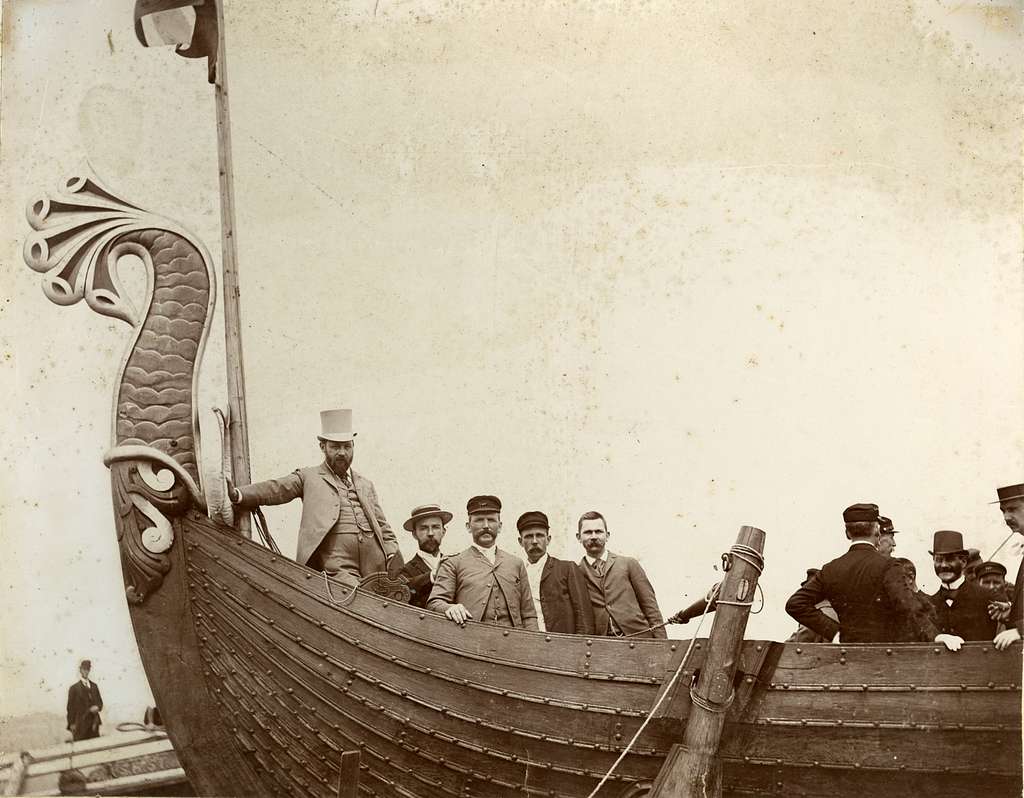
The Viking arrived in New York Harbor in mid-July 1893 to massive crowds. Thousands of people lined the shores to watch this ghost from the past sail into the modern world. From New York, the crew sailed through the Great Lakes to Chicago, arriving at the World’s Fair on July 12th.
The timing and symbolism were perfect. Here was Chicago celebrating Columbus, and the Norwegians showed up in a replica of a ship that had reached America five centuries before Columbus was born. The message was clear and a little bit cheeky: the Vikings were here first, and now we’ve proved their ships could do it.
The Viking became one of the most popular attractions at the fair. People couldn’t get enough of it. This wasn’t some dusty artifact behind glass. This was a working vessel that had just crossed an ocean using technology from the Middle Ages.
So… What Happened Next?
Here’s where it gets a little bittersweet.
After the fair, the excitement faded. The Viking was donated to Chicago’s Field Museum, then transferred to Lincoln Park. Then it sat in a park. Then it was moved to various locations around Chicago, forgotten, and left to decay in a shed behind the Museum of Science and Industry. For decades. Rain poured through the roof. Paint peeled. Rats nested. The same ship that had conquered the Atlantic was being destroyed by neglect and Chicago weather.
Eventually, it was rescued and restored through the efforts of dedicated volunteers and the Friends of the Viking Ship organization. Today, it lives in Geneva, Illinois, about 40 miles west of Chicago, indoors, finally, under the care of volunteers who are still fighting to preserve its memory and educate people about its significance.
The restoration work is ongoing. The ship requires constant maintenance and climate control to prevent further deterioration. It’s housed in a specially built structure in Good Templar Park, where visitors can see it up close and learn about both Viking maritime history and Andersen’s remarkable 1893 voyage.
Why This Still Matters
But most people still don’t know this story. They don’t know that a Viking ship crossed the Atlantic in 1893 to prove history wrong. They don’t know that twelve Norwegian sailors risked their lives to honor their ancestors and rewrite the narrative about who discovered what.
And succeeded.
The voyage changed how historians and archaeologists viewed Viking ships and Norse seafaring capabilities. It provided hard evidence that the sagas weren’t just tall tales. The Norse really did have the technology and knowledge to cross oceans systematically, not just by lucky accident.
Every time you hear about Viking exploration now, about L’Anse aux Meadows in Newfoundland or theories about how far south the Norse traveled, remember that we know it was possible partly because Magnus Andersen was crazy enough to prove it. Not with theories or computer models, but by actually doing it.
That’s the kind of history worth remembering. The kind where someone looks at a thousand-year-old design and says, “I bet that still works,” and then proves it by sailing into a storm.
Sources:
1. Viking longships – Wikipedia