Imagine Planning a War… 150 Years in Advance
In the early 1800s, the Swedish Navy faced a serious problem: their ships were wooden, war was looming, and the country was running out of straight, strong oak trees to build battleships.
So, in a fit of very long-term military thinking, Sweden did something remarkable. They planted an entire forest.
The plan? Grow the navy’s future right into the ground. Fast-forward 150 years, and that same forest is mature, standing tall and ready.
One small issue: nobody needs wooden warships anymore.
The Ultimate Long Game: Naval Logistics by Oak Sapling
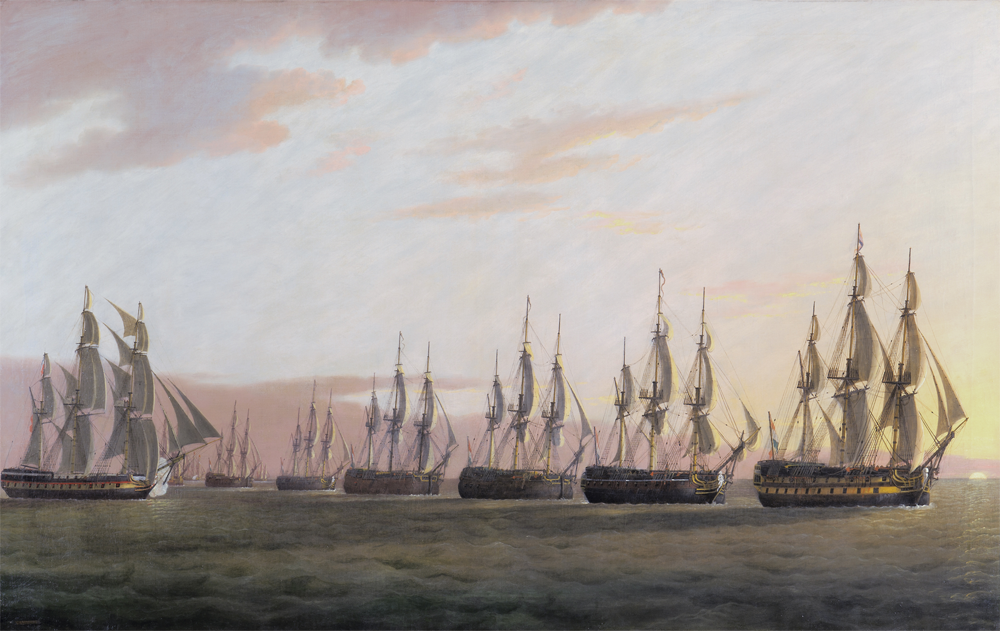
Back in the 1830s, the Swedish Navy had reason to worry. Timber was strategic. Oak was as valuable as oil would become centuries later, essential for building warships that could rule the Baltic Sea. But mature oak trees suitable for shipbuilding take about 150 years to grow to proper size and density.
The situation was becoming critical. Sweden had been a major naval power since the 17th century, and maintaining that status required constant shipbuilding. Each ship of the line required thousands of oak trees. The problem wasn’t just quantity but quality. You couldn’t use just any oak. Shipbuilders needed trees with specific characteristics: straight trunks for planking, curved branches for the ribs of ships, and wood dense enough to withstand cannon fire and the relentless assault of seawater.
Natural oak forests were being depleted across Europe. Britain faced similar problems and had to import timber from the Baltic states and North America. Denmark had already begun rationing their oak supplies. Sweden looked at their forests and saw a crisis brewing. If they waited until the shortage became acute, it would be too late. Trees don’t grow on military timelines.
The Visingsö Solution
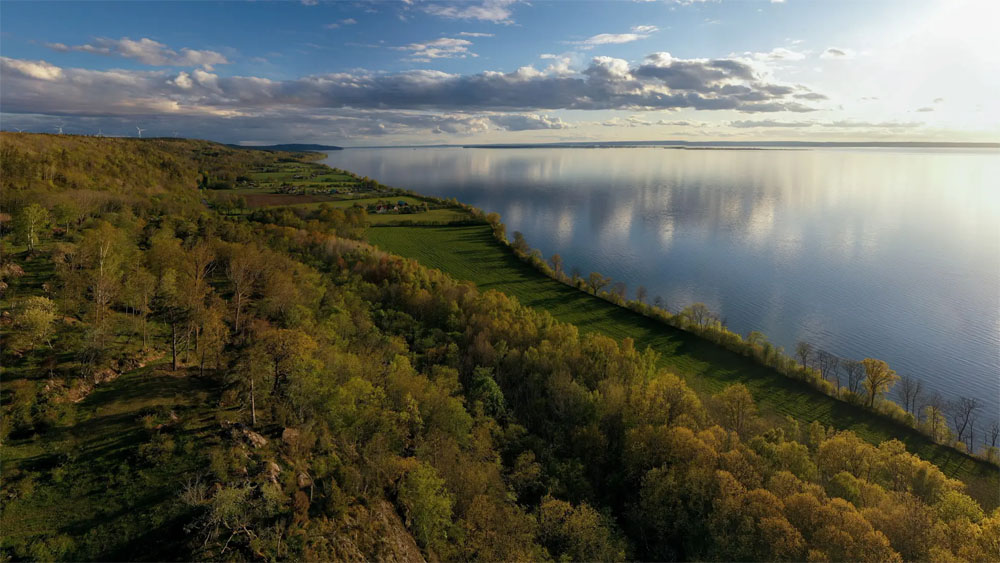
So, they launched a botanical version of a military-industrial complex. In 1829, under the direction of naval officials and forestry experts, Sweden began planting over 300,000 oak trees on the island of Visingsö in Lake Vättern. The island was chosen carefully. Its soil was rich, the climate suitable, and its location in Sweden’s second-largest lake made it easily accessible by water for eventual timber transport.
The project was massive in scope. Workers planted seedlings in carefully planned rows, spacing them to allow for optimal growth. They weren’t just throwing seeds in the ground and hoping for the best. This was precision forestry guided by the best scientific knowledge of the era. The Swedish Navy hired foresters to tend the saplings, thin out weaker trees, and ensure the strongest specimens would grow into the perfect shapes needed for warship construction.
The navy envisioned a future where Sweden’s maritime supremacy would be carved straight from this leafy arsenal. Officers drew up plans showing which sections of the forest would supply which parts of future ships. Some areas were designated for straight planking timber, others for the curved structural pieces that formed a ship’s skeleton.
It was smart. Strategic. Ambitious. The kind of long-term thinking that seems almost impossible in today’s world of quarterly earnings reports and election cycles. Also kind of hilarious in retrospect.
When the World Moved Faster Than Trees Could Grow
Here’s the thing about 150-year plans: a lot can change in a century and a half. The people who planted those oaks in 1829 could not have imagined how rapidly naval technology would evolve.
The first major shift came in the 1860s, just 30 years into the project, when ironclad warships proved their worth during the American Civil War. The Battle of Hampton Roads in 1862 showed the world that wooden ships were becoming obsolete. The USS Monitor and CSS Virginia battled to a draw, but both ships were covered in iron armor that wooden vessels simply couldn’t penetrate.
European navies took notice. Britain launched HMS Warrior in 1860, the first iron-hulled warship. France, Germany, and other naval powers followed suit. Sweden, watching their oak saplings grow slowly toward maturity, began to understand that the future was metal, not wood.
By the 1890s, steel had replaced iron as the material of choice. Ships were now built in factories and shipyards, not carved from forests. They were powered by steam engines, then oil turbines, not wind in canvas sails. The whole paradigm had shifted.
The Forest Nobody Needed
By the time the forest reached full maturity in the 1980s, the Swedish Navy had long since stopped building wooden ships. The last wooden warship in the Swedish fleet had been decommissioned decades earlier. Steel, engines, and eventually guided missiles had taken over the war game. The trees? Still there. Still oak. Still beautiful.
But not exactly battleship-ready. Not because they weren’t good trees, they were magnificent specimens, exactly as planned. But because the entire premise had become as outdated as the idea of naval warfare itself had become transformed.
From Battleships to Furniture: Finding New Purpose
Instead of becoming the backbone of maritime dominance, these oaks became part of a scenic walking trail. The island of Visingsö, with its historic castle ruins and now mature oak forest, became a tourist destination. Visitors bike along paths beneath the towering trees, completely unaware they’re walking through what was meant to be a lumber yard for warships.
Some of the timber has been harvested over the years, though not for military purposes. High-end furniture makers prize the wood for its quality. The density and grain that would have made it perfect for ship hulls also make it ideal for tables, cabinets, and decorative pieces. A dining table made from Visingsö oak carries a certain prestige, even if few people know its origin story.
Local craftsmen have used the wood for restoration projects on historic buildings. When old churches or manor houses need repair, Visingsö oak provides timber that matches the quality of original 19th-century construction. In a way, the trees are still serving a public purpose, just not the one anyone planned.
But most of the forest? Just left to grow, untouched, a quiet monument to a plan the world moved on from. It’s a little like stocking up on floppy disks for the AI revolution, or training carrier pigeons for the internet age.
Was It a Mistake? Or a Masterpiece of Patience?
Here’s where it gets interesting: was it really a waste? The question has sparked debate among historians, ecologists, and policy analysts for decades.
Some argue the forest is proof of bureaucratic overreach, an example of government planning taken to an absurd extreme. They point out that the resources spent planting and maintaining 300,000 oak trees over 150 years could have been invested elsewhere. The manpower, the land use, the decades of forestry management, all for ships that were never built.
Critics use it as a cautionary tale about the limits of central planning. How can anyone predict what will be needed 150 years in the future? The Swedish Navy made their best guess and got it spectacularly wrong. Markets, the argument goes, would have adapted more efficiently to changing circumstances.
The Case for Visionary Planning
Others see it as a beautiful expression of intergenerational foresight, regardless of the outcome. After all, how often does a government plan for a century and a half into the future? Modern democracies struggle to fund infrastructure projects that take a decade to complete. Politicians rarely think beyond the next election. Here was a government that planted trees for great-grandchildren who weren’t yet born.
Sure, the navy didn’t need the wood. But Visingsö got a forest. And not just any forest, one of the most biodiverse, carefully managed oak reserves in Europe. It has its own ecosystem now, home to countless species of birds, insects, and mammals. Ecologists study it as an example of long-term forest management.
The oak forest provides environmental benefits that weren’t part of the original calculation. It sequesters carbon, prevents soil erosion, and maintains biodiversity. In an era of climate change and ecological crisis, having a mature forest turns out to be pretty valuable, even if it wasn’t the intended value.
A living, breathing “what if” stands on Visingsö, testament to both human ambition and the impossibility of predicting the future.
What Other Countries Learned From Sweden’s Oaks
Sweden wasn’t alone in planting naval timber reserves, but they’re the most famous example because the forest still exists in such pristine condition. Britain planted oak forests for the Royal Navy throughout the 18th and 19th centuries, though most have since been converted to other uses or harvested for non-naval purposes.
France maintained strategic timber reserves well into the 20th century. The Forest of Tronçais in central France was specifically managed to provide oak for naval vessels and is still carefully maintained, though now primarily for furniture-grade timber and conservation.
What makes Sweden’s example unique is the purity of the original purpose and the complete obsolescence of that purpose. The forest wasn’t gradually repurposed or harvested early. It was allowed to reach full maturity exactly as planned, just after the plan had become meaningless.
The lesson other nations learned? Technology moves faster than trees grow. By the mid-20th century, strategic planning focused on resources that could be developed or acquired quickly. Nobody plants forests for military hardware anymore, though countries do maintain strategic oil reserves, stockpile rare earth minerals, and invest in semiconductor production capabilities.
The Accidental Legacy of the War Trees
Maybe that’s the charm of it. The oak trees outlived their original purpose, but maybe that’s not a failure. Maybe it’s a lesson in how plans evolve and purposes transform.
Not every plan goes as expected. Some grow into something else entirely, often something better than the original intention. The Swedish Navy wanted raw materials for war. What they got instead was a legacy of peace, a forest that brings joy to hikers, sustains wildlife, and stands as a monument to both human foresight and human folly.
What started as war prep ended up as an ecological gift. Sweden wanted ships to project power across the Baltic. Instead, they got a forest that projects a different kind of power, the power of patience, the beauty of long-term thinking, and the unpredictability of progress.
Modern Parallels and Timeless Questions
The story of Visingsö’s oak forest resonates today because we face similar questions about long-term planning. How do we prepare for a future we can’t predict? Should governments invest in infrastructure that might become obsolete? What’s the right balance between ambitious planning and adaptive flexibility?
Consider modern examples. Countries are investing billions in 5G networks that might be superseded by satellite internet. Cities are building subway systems that could be made obsolete by autonomous vehicles. Universities are training students for jobs that AI might automate.
The oak forest reminds us that obsolescence is always possible, but that doesn’t mean planning is pointless. Those trees have value, just not the value anyone expected. Maybe that’s okay. Maybe the measure of a good plan isn’t whether it achieves its original purpose but whether it creates something worthwhile.
The Forest Today: A Living Monument
Today, the oak forest on Visingsö is protected as a cultural and natural heritage site. Visitors come from around the world to walk among trees that were planted with such specific, now-antiquated purpose. Tour guides tell the story with a mix of admiration and amusement.
The trees themselves are magnificent. Some have grown to over 30 meters tall, with trunks thick enough that three people linking arms can barely encircle them. They stand in ordered rows, evidence of their cultivated origin, but the understory has filled in naturally. Younger trees, wildflowers, and shrubs have created layers of vegetation that support a thriving ecosystem.
In spring, the forest floor carpets with wildflowers. In autumn, the canopy turns gold and bronze. In winter, bare branches create geometric patterns against gray skies. The forest has become beautiful in ways that naval planners never considered because beauty wasn’t the point. Function was the point. But function faded, and beauty remained.
Not a bad deal, all things considered. Sweden set out to build a navy and ended up with something more lasting. Steel ships rust and sink. Military power rises and falls. But a forest, properly tended, can stand for centuries.
The oaks of Visingsö will likely outlive the Swedish Navy itself, outlive the nation-state system that created them, outlive the very concept of naval warfare as we know it. They’ll stand as a reminder that sometimes our greatest gifts to the future are the ones we never intended to give, the plans that fail in just the right way to become something better than success.
The Lesson in the Leaves
So what do we take from this peculiar piece of history? Perhaps that long-term thinking is valuable even when we get the details wrong. Perhaps that nature has a way of making use of our plans regardless of our intentions. Perhaps that failure and success aren’t always as distinct as we imagine.
The Swedish Navy failed to predict the future. But Sweden succeeded in creating something of lasting value. The trees didn’t fulfill their purpose, but they found a better one. That’s not tragedy. That’s transformation.
In an age obsessed with disruption and rapid change, there’s something quietly radical about a 150-year plan, even one that became obsolete. It suggests that some things are worth investing in for their own sake, that stewardship matters even when outcomes are uncertain, that patience is its own kind of power.
The oak forest of Visingsö stands as proof that sometimes the best outcome is the one nobody planned for, the unexpected gift that emerges when we dare to think beyond our own lifetimes. The Swedish Navy may not have gotten their battleships, but they gave future generations something arguably more precious: a forest to wander in, a story to ponder, and a lesson in how beautifully plans can fail.
Sources:
1. Swedish Forest Agency: https://www.skogsstyrelsen.se/
2. BBC Travel: “Sweden’s Forest of War” https://www.bbc.com/travel/article/20201026-swedens-forest-of-war-trees
3. National Geographic: “Visingsö: The Island of War Trees“