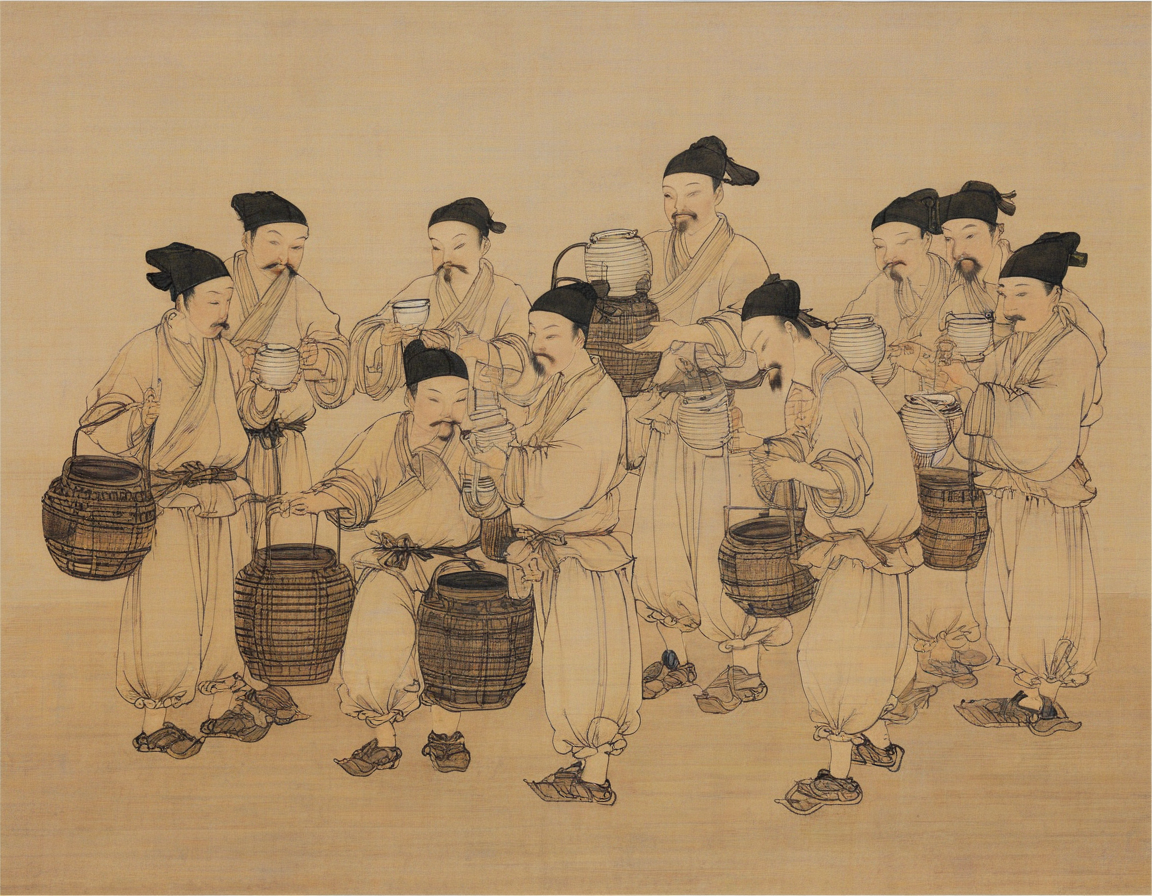
Picture this: a bustling riverside town, merchants shouting prices over fragrant steam from food stalls, kids chasing each other through narrow streets, and a scholar quietly painting landscapes with ink and brush while sipping tea. Welcome to the Song Dynasty. It’s not a fantasy, it’s history, and it’s way cooler than your high school textbook made it sound.
Not Just Another Dynasty
The Song Dynasty, which ruled China from 960 to 1279, doesn’t usually get top billing in flashy documentaries. It lacked the wall-building spectacle of the Qin or the military brawn of the Tang. No terra cotta armies. No legendary conquests that stretched across continents. Just three centuries of quietly being one of the most advanced civilizations on Earth.
But if you’re into cities with indoor plumbing before most of Europe had paved roads, mind-blowing inventions that changed warfare and commerce forever, or paintings so delicate they feel like whispers, then the Song is your jam.
They called it a golden age for good reason. The Song period saw China’s population double, reaching over 100 million people. The economy boomed. Literacy rates climbed higher than anywhere else in the world. Art and philosophy flourished. And all of this happened while Europe was deep in what we politely call the Medieval period, where most people lived their entire lives without traveling more than ten miles from where they were born.
The Song Dynasty was actually split into two periods: the Northern Song (960-1127) with its capital at Bianjing, and the Southern Song (1127-1279) after they lost the north to invaders and relocated to Lin’an. But throughout both periods, the innovation never stopped.
A Tech Boom Before Silicon Valley
The Song era was basically the original innovation hub. Gunpowder? The Tang Dynasty invented it, but the Song perfected it and weaponized it, creating bombs, rockets, and flamethrowers that terrified their enemies. They had grenades packed with shrapnel. They had landmines triggered by tripwires. Medieval Chinese warfare looked more like something from a sci-fi movie than the sword-and-shield combat happening in Europe.
The compass? Mass-produced and used for serious maritime exploration. Song sailors were navigating the Indian Ocean with magnetic compasses while European sailors were still relying on stars and guesswork. This technology enabled trade routes that connected China to Africa, the Middle East, and Southeast Asia.
Printing? The Song took woodblock printing and upgraded it to moveable type, baby, way before Gutenberg. Bi Sheng invented ceramic moveable type around 1040, allowing for faster, cheaper book production. Suddenly, knowledge wasn’t just for aristocrats who could afford hand-copied manuscripts. Education became accessible to anyone with ambition and a bit of money.
And then there was paper money, called jiaozi. Yes, centuries before it became standard elsewhere, the Song had already ditched the heavy coins and embraced lightweight currency. The government even had debates about inflation, monetary policy, and how much paper money to print, just like we do now. Only with more calligraphy and fewer hashtags.
They also pioneered early forms of banking, including deposit shops, foreign exchange, and even something resembling checks. Merchants could deposit money in one city and withdraw it in another using a certificate. International trade became vastly easier.
Life in the Cities: Not Just Mud and Straw
Imagine being dropped into Bianjing (modern-day Kaifeng) or Lin’an (today’s Hangzhou). You’d probably be shocked by how modern it feels. These were mega-cities by medieval standards, with populations in the millions. Bianjing, at its peak, housed over one million people, making it the largest city in the world at the time.
Street lighting? Check. Oil lamps lined major thoroughfares, allowing nightlife to flourish. Organized waste disposal? Yep. The government had sanitation workers who collected waste and night soil (human waste used as fertilizer). Bookstores, noodle shops, tea houses, night markets, theaters, brothels? All of the above, operating openly in designated entertainment districts.
The cities never slept. Unlike European cities where curfews shut everything down after dark, Song cities hummed with activity all night. You could get dumplings at 2 AM. You could browse books by lamplight. You could watch acrobats perform or listen to storytellers spin tales.
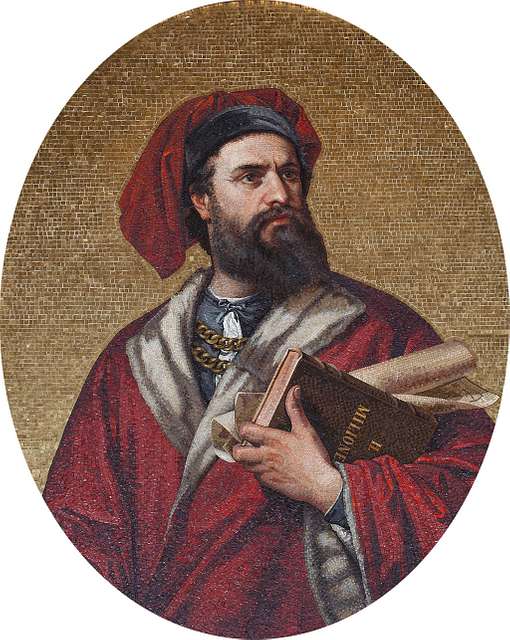
Hangzhou in particular was described by the Venetian traveler Marco Polo as the finest city he had ever seen, “the city of heaven” with canals, bridges, and markets that dazzled him. And while his stories often read like medieval Yelp reviews dipped in exaggeration, he wasn’t entirely off. Hangzhou had West Lake, beautiful gardens, sophisticated waterworks, and a quality of life that exceeded anything in Europe.
The cities had fire departments with watchtowers to spot fires early. They had systems of canals for transportation and sewage. They had parks and public gardens. Urban planning was taken seriously, not just left to medieval chaos.
Culture That Feels Alive
The Song were lovers of the arts, but not in a stiff, snobby way reserved for elites in palace halls. Calligraphy, poetry, and especially painting flourished across social classes. Yes, emperors collected masterpieces, but middle-class folks, and yes, there was a thriving middle class of merchants, minor officials, and skilled craftspeople, got in on the action too.
If you had a steady income, you could collect art, discuss books at tea houses, or even sponsor your favorite poet. Literacy was valued and achievable. Books were affordable. Education was the path to success through the civil service examination system, which meant even poor families saved money to educate promising sons.
One of the coolest examples of Song art? “Along the River During the Qingming Festival” by Zhang Zeduan. It’s a panoramic scroll painting, over 17 feet long, so detailed it’s been called China’s Mona Lisa. But better, because it also has camels, street food vendors, a rainbow bridge packed with people, shops, boats, and hundreds of individual figures going about their daily lives. It’s like a snapshot of an entire city frozen in time.
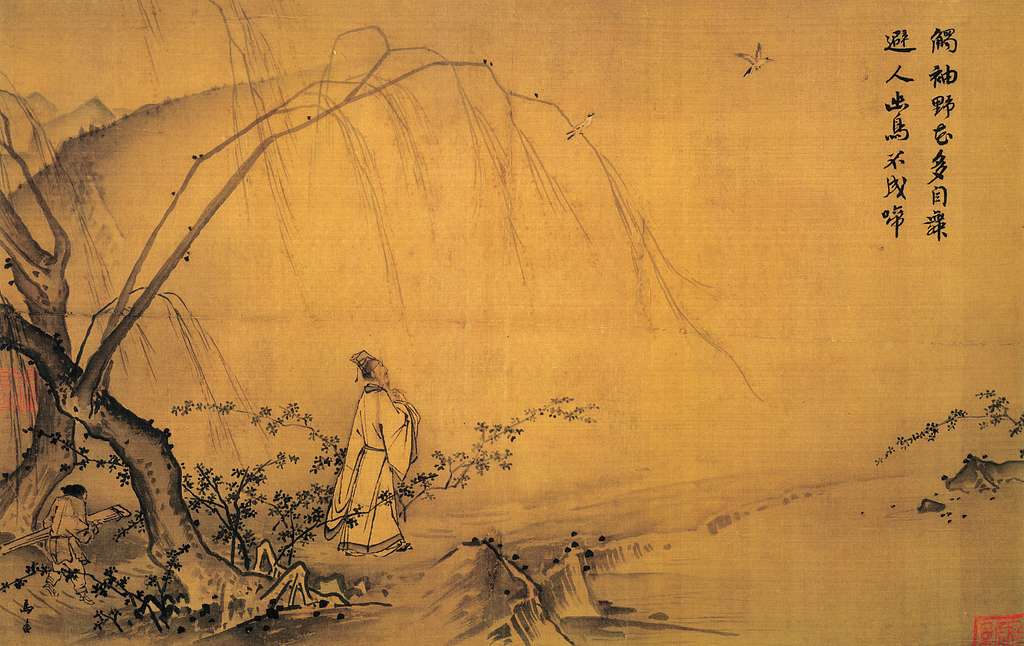
Painters developed landscape painting into a sophisticated art form. They painted misty mountains, lonely scholars in nature, bamboo groves in wind. The paintings weren’t just pretty. They were philosophical statements about humanity’s place in the natural world, about simplicity, about the impermanence of life.
Poetry clubs met regularly. Scholars gathered to compose verses, drink wine, and critique each other’s work. It was competitive but also communal, a way of building social networks and demonstrating cultural refinement.
Women and the Complicated Question of Status
Let’s be real. The Song Dynasty wasn’t some utopia. Women’s rights? Complicated at best. While some elite women enjoyed education, managed family businesses when their husbands died, and even published poetry, the era also saw the rise and spread of foot binding. A tragic and painful practice tied to beauty standards and social status that would persist for centuries.
Girls as young as five or six had their feet broken and bound tightly to prevent growth, creating the tiny “lotus feet” that were considered beautiful and desirable for marriage. The practice caused lifelong pain and disability, limiting women’s mobility and independence.
So yes, this golden age had its shadows. Which makes it even more human and more worth studying. It wasn’t perfect, but what society is? The Song made incredible advances in technology and culture while also enforcing rigid social hierarchies and gender restrictions.
Some women did push boundaries. There were female poets like Li Qingzhao, considered one of the greatest poets in Chinese history. There were courtesans who were educated and cultured, sometimes more so than respectable wives. But these were exceptions that proved the rule.
The Science Wasn’t Just Flashy, It Was Practical
Song China wasn’t just inventing for fun or prestige. Their knowledge of astronomy, engineering, and medicine translated into real-world improvements in people’s lives. Agricultural texts helped farmers boost yields through better irrigation, crop rotation, and new rice varieties. Water-powered clocks tracked time with precision for astronomical observations.
Engineers like Su Song built mechanical marvels, including an astronomical clock tower completed in 1094 that wouldn’t look entirely out of place in a steampunk novel. It was over 30 feet tall, powered by water, and automatically tracked the movements of celestial bodies while also displaying the time. Gears, chains, escapement mechanisms, the engineering was centuries ahead of its time.
They had a deep understanding of how nature and technology intertwined, and they weren’t afraid to experiment with both. Medical texts documented hundreds of herbal remedies. Smallpox inoculation was practiced. Forensic science manuals helped officials solve crimes by examining evidence.
Mathematics advanced significantly. They developed algorithms for solving equations, worked with negative numbers, and made progress in geometry and algebra. This wasn’t just theoretical. It was applied to engineering, construction, and commerce.
What Brought It All Crashing Down?
The short version? The Mongols.
The Song Dynasty eventually fell to the mighty Kublai Khan and his expanding empire in 1279. But not because they were backward or lazy or weak. In fact, the Southern Song held out against the Mongol advance for decades, longer than most empires could have managed against the most effective military machine the world had seen.
The Song had innovative weapons, including early gunpowder weapons and naval technology. But the Mongols had mobility, ruthlessness, and an ability to adapt enemy technology quickly. They learned Chinese siege warfare. They recruited Chinese engineers. They outmaneuvered Song forces repeatedly.
The final stand came at the naval Battle of Yamen in 1279. Rather than surrender, the last Song emperor, just a child, was carried into the sea by a loyal official. They drowned together. The dynasty ended in tragedy, but their legacy stuck around.
Why the Song Still Matter
The Song Dynasty’s contributions aren’t just ancient curiosities gathering dust in museums. Their emphasis on education, urban living, technology, and the arts laid the groundwork for much of East Asian civilization. And they did it all while Europe was still trying to figure out how to bathe regularly and not die from plague every few decades.
Many historians argue that Song China was on the verge of an industrial revolution. They had the technology, the economic systems, the urbanization. What they didn’t have was the particular combination of circumstances that would later spark industrialization in Britain. But the potential was there.
So the next time you hear someone talk about “golden ages,” remember that innovation doesn’t always come with fireworks and conquest. Sometimes it arrives in the soft scratch of a brush on silk, in the hiss of boiling tea, in the quiet dignity of a society that loved books more than battles.
The Song proved you could be powerful without being militaristic. You could be innovative without being imperial. You could create a sophisticated, complex society that valued knowledge, art, and commerce as much as warfare.
And maybe that’s the kind of golden age we need more of. One where the greatest achievement isn’t how many enemies you defeated, but how many people you educated, how beautiful your cities were, and whether someone 800 years later looks at your paintings and feels something profound.
That’s legacy. That’s what the Song Dynasty understood. And that’s why they still matter.
Sources:
1. Khan Academy – Introduction to the Song Dynasty
2. Britannica – Song Dynasty
3. ASIA for Educators – The Most Advanced Society in the World