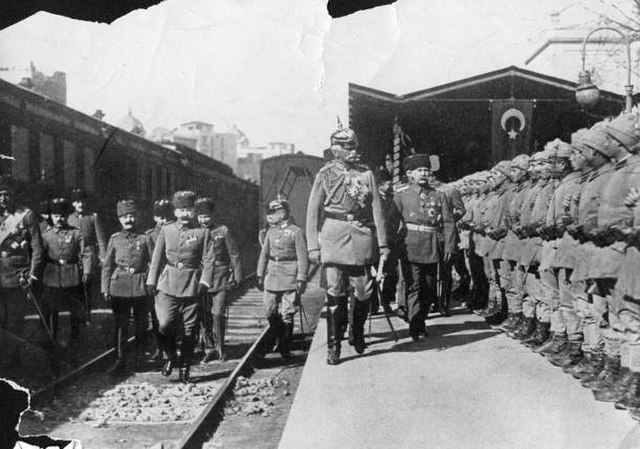
It feels like a story ripped from the pages of a historical drama: a powerful empire that once stretched across continents collapses, and its last heir ends up in a modest apartment, feeding pigeons, unknown to almost everyone passing by.
That’s not fiction. That’s what really happened.
While the world remembers the grandeur of the Ottomans, the palaces, the conquests, the call to prayer echoing through Istanbul’s skyline, almost no one remembers the final chapter. The part after the fall. The part where royalty fades quietly into the background. This is the story of the last Ottoman heir, a tale of exile, loneliness, and the strange weight of being a nobody when your ancestors ruled everything.
A Glorious Fall: When Empires Don’t Explode, They Fade
The Ottoman Empire lasted over 600 years. That’s longer than the British, Roman, or even Mongol empires. At its peak in the 16th and 17th centuries, it controlled vast swaths of Europe, Asia, and Africa. Sultans ruled from the gilded halls of Topkapi Palace, wielding unimaginable power. The empire stretched from the gates of Vienna to the Persian Gulf, from the Crimean Peninsula to the deserts of North Africa.
But by the early 20th century, the cracks were too deep to hide. The empire had been losing territory for decades, earning the nickname “the sick man of Europe.” Nationalist movements were tearing it apart from within. Modernization efforts came too late and too haphazardly. The old systems couldn’t compete with the industrialized powers of Western Europe.
After backing the wrong side in World War I, the empire was chopped up, reorganized, and eventually dismantled entirely. The Treaty of Sèvres in 1920 carved up Ottoman territories among the victorious Allied powers. What remained became the Republic of Turkey under Mustafa Kemal Atatürk, a secular nationalist who had no use for sultans or caliphs.
In 1924, the newly formed Republic of Turkey officially abolished the caliphate and sent the entire Ottoman royal family into exile. Every single member. Over 150 people, from infants to elderly princes, were given days to pack their belongings and leave the only home most of them had ever known.
No farewell. No ceremony. Just a one-way ticket out. They scattered across Europe, the Middle East, and eventually America, carrying nothing but their names and fading memories of marble courtyards and silk cushions.
Meet Ertuğrul Osman: The Prince Who Took the Subway
Fast forward to the late 20th century. While most of the world had forgotten the Ottoman dynasty, one man still carried the name. His name was Ertuğrul Osman.
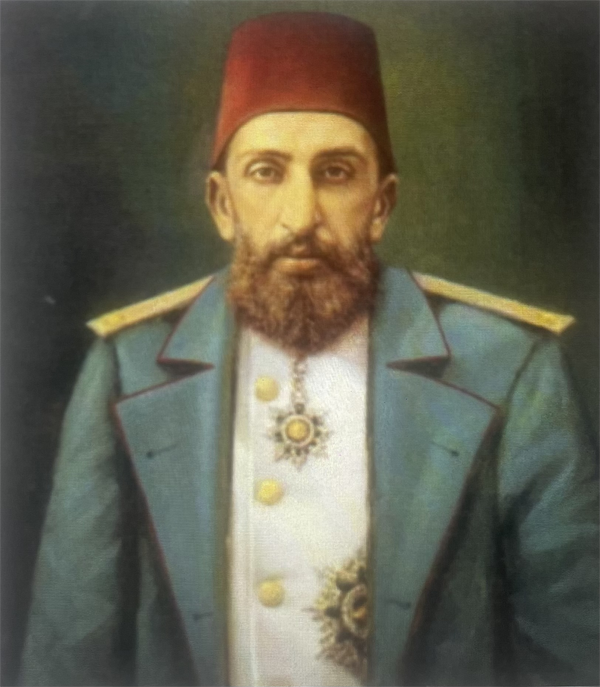
Born in 1912 in Istanbul, Ertuğrul was the grandson of Sultan Abdul Hamid II, one of the last powerful Ottoman rulers. He was 12 years old when his family was banished, old enough to remember the palaces but young enough to adapt to a radically different life. He would never again see his homeland for most of his life, spending decades wandering through exile in Europe before finally settling across the Atlantic.
Instead, he ended up in… New York City.
That’s right. The last Ottoman prince lived in a rent-controlled apartment on Lexington Avenue in Manhattan. Not in some grand estate or diplomatic residence, but in a regular apartment building where the elevator sometimes broke and neighbors complained about the heat in winter.
He wore simple clothes, rode the subway, and could often be seen walking to the corner bakery. Most people assumed he was just another elderly immigrant, one of millions who’d come to America seeking a better life. Very few realized he could have once laid claim to one of the most powerful thrones in history.
Ertuğrul worked ordinary jobs to support himself. He spent years in various positions, including working for the Turkish Mission to the United Nations. Nothing glamorous. Nothing befitting a prince. Just the kind of work that pays the bills and fills the days.
The Quiet Life of an Exiled King
Ertuğrul Osman never married for most of his life. He kept to himself, largely avoiding the spotlight. He lived alone in that apartment for decades, a solitary figure maintaining routines that probably looked identical to thousands of other New Yorkers. Coffee in the morning. The newspaper. Maybe a walk through Central Park.
But what made him fascinating wasn’t just that he was royalty in hiding, it was how completely he rejected the drama of reclaiming any kind of power.
While some exiled royals scheme or campaign for restoration, maintaining courts in exile and plotting returns that will never happen, Osman simply… didn’t. When asked if he wanted the Ottoman throne restored, he said something along the lines of: “What would I do with it? Rule over pigeons?”
That kind of humility is almost absurdly rare among people with royal blood. History is full of pretenders to fallen thrones, people who spend their entire lives insisting they’re the rightful this or the legitimate that. Ertuğrul could have played that game. He had the bloodline. He had the name. Some monarchists in Turkey would have supported the idea.
But maybe that’s the point. Maybe exile strips away the illusion of grandeur and leaves only the human being behind. Maybe when you’ve actually lost everything, you realize how little the titles meant in the first place.
A Late Love Story
In one of life’s surprising turns, Ertuğrul did eventually marry. In 1991, at age 79, he wed Zeynep Tarzi, an Afghan princess and descendant of the Barakzai royal family. She was 57. Both had spent most of their lives alone, both carried royal blood that meant everything and nothing simultaneously.
Their wedding was small and private, held in New York with just a handful of friends. No state ceremony. No diplomatic guests. Just two people who understood what it meant to be the last of something that no longer existed.
Zeynep brought warmth to Ertuğrul’s final years. They traveled together, attended Turkish cultural events in New York, and maintained quiet dignity in a world that had moved on from monarchies and empires.
Homecoming After 85 Years
It wasn’t until 1992 that Turkey allowed Ottoman descendants to return. The law banning them had been quietly repealed, a gesture of reconciliation with history. But Ertuğrul didn’t rush to reclaim any palaces. He waited until 2004 to visit, and only after much persuasion from Turkish officials and cultural organizations who wanted to honor him.
When he finally returned, it wasn’t as a sultan, but as a quiet, slightly bemused old man being led through a country that had long since moved on. He was 92 years old, frail, using a cane, squinting in the bright Turkish sun at landmarks he’d last seen as a child.
He visited Topkapi Palace as a guest, not as its heir. He walked through rooms where his grandfather had ruled, where decisions affecting millions had been made, where the weight of empire had pressed down on young sultans. Now it was a museum. Tourists snapped photos. Security guards asked people not to touch the displays.
Turks greeted him kindly, even nostalgically. There were small ceremonies, respectful coverage in the press, a sense that history was being acknowledged. But the connection had frayed. Too many years had passed. Modern Turkey was secular, democratic, forward-looking. The Ottoman past was heritage, not destiny.
Ertuğrul seemed to understand this perfectly. He didn’t demand anything. Didn’t make speeches about restoration. He simply accepted the hospitality, thanked his hosts, and returned to New York.
The Final Curtain
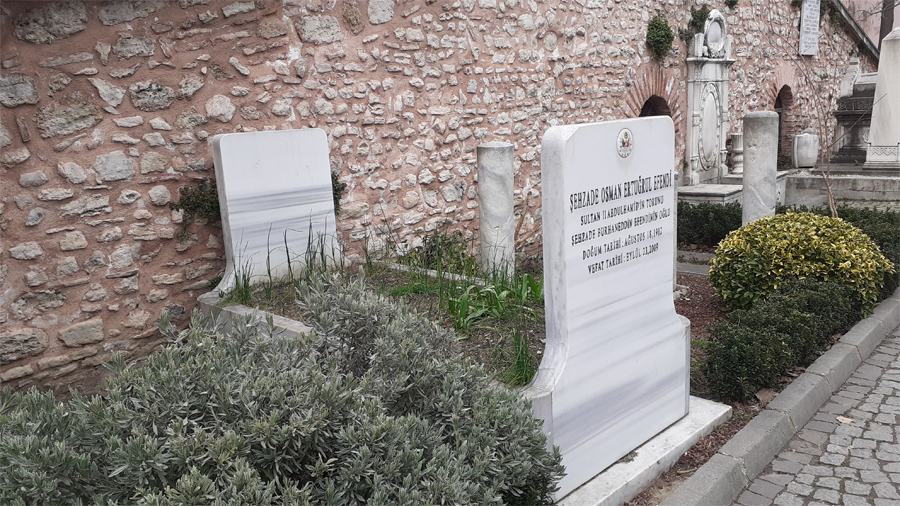
Ertuğrul Osman died in 2009 at the age of 97. He was given a funeral at the historic Sultanahmet Mosque in Istanbul, not far from where Ottoman sultans once led Friday prayers before thousands. It was dignified, but understated. Fitting, really.
Turkish officials attended. So did descendants of other Ottoman families scattered across the globe. There was respectful coverage in international media, brief obituaries noting the end of a dynasty. But within days, the news cycle moved on.
His passing marked not just the end of a lineage, but the end of a very specific kind of story, a story about what happens after the credits roll. About what happens when the empire is gone, and all that’s left is a name.
With Ertuğrul’s death, the direct male line of the Ottoman dynasty effectively ended. There are still descendants, cousins and distant relatives carrying Ottoman blood. But none with quite the same claim, the same proximity to the throne, the same living memory of what it meant before it all disappeared.
Why This Story Sticks
It’s strange, isn’t it? How someone born into a destiny of unimaginable power ends up as a modest figure in a city of millions. How the heir to sultans who commanded armies and built mosques that still stand centuries later spent his days riding the 6 train and buying bread at the corner store.
But there’s something deeply human about it. Something that cuts through all the historical pageantry and gets to a simple truth about how life actually works.
We’re so used to thinking of history in terms of explosions, revolutions, assassinations, dramatic betrayals. But so often, it just… fades. Empires don’t always end with a bang. Sometimes they end with an old man in an apartment, remembering palaces he’ll never see again.
Ertuğrul Osman didn’t try to resurrect the past. He simply lived in the present. He paid his rent, he rode public transportation, he made peace with being nobody special in a city full of people convinced of their own importance.
Maybe that’s the real power. Knowing when to let go. Understanding that holding onto what’s gone will only make you bitter and small. Accepting that your story gets to be different from your ancestors’ story, and that’s okay.
The Ottoman Empire built the Hagia Sophia, controlled the Silk Road, shaped the fate of three continents. Ertuğrul Osman fed pigeons in Manhattan and took the subway to get groceries. Both are true. Both matter. And somehow, the contrast between them tells us more about the human condition than any history textbook ever could.
Sources:
1. BBC: The Ottoman dynasty in exile
2. NY Times obituary: Ertuğrul Osman