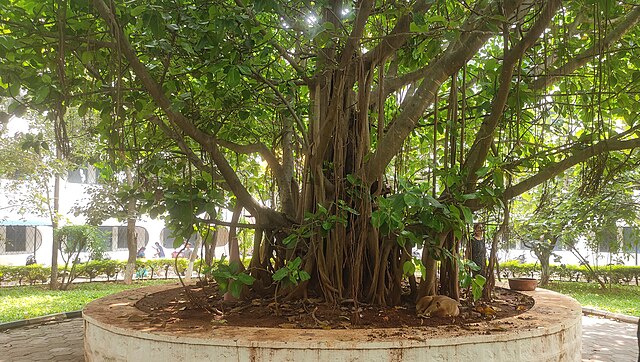
Picture this: It’s 1898 in the dusty plains of what’s now Pakistan. A British officer, decked out in full colonial swagger, is pacing in fury because a tree refused to move out of the way. So naturally, he arrests it.
No, this isn’t satire. This actually happened.
A single acacia tree was placed under official arrest. Chains, arrest papers, and all. And over a century later, it’s still “jailed.” That tree, now known as the “arrested tree,” has become a symbol of just how absurd colonial arrogance could get, and how nature somehow always has the last laugh.
Meet the Offender: One Tree, Zero Regrets
The story goes like this: in the summer of 1898, a somewhat tipsy British officer (some accounts name him as James Squid, though records are spotty at best), reportedly annoyed at how slowly his carriage was progressing down the road, blamed a nearby tree for obstructing his royal path.
Rather than go around it like a normal person, he did what only an empire intoxicated with its own self-importance would do. He ordered the tree arrested.
According to oral accounts passed down through generations of locals in the region, the officer instructed his men to wrap the tree in heavy iron chains. A notice was posted declaring that this acacia was now a “prisoner under arrest.” And there it stood. No court date. No lawyer. No bail hearing. Just an unrepentant tree being treated like it had committed treason against the Crown.
The whole incident supposedly unfolded on a particularly hot afternoon when the officer, having consumed a generous amount of whiskey during a luncheon with fellow officers, decided to take a ride through the cantonment. When his carriage driver struggled to navigate around the acacia’s sprawling branches, the officer took personal offense. In his alcohol-fueled state, he reportedly shouted that the tree was deliberately blocking the path and showing disrespect to Her Majesty’s representative.
Because of course, when your ego’s that big, even trees are suspect.
Still Shackled. Still Standing.
Here’s the kicker: the tree is still there. Over 125 years later.
Located inside the military cantonment of Landi Kotal, near the famous Khyber Pass, the acacia remains encircled by a rusting chain. There’s even a plaque nearby that tells the story, though whether it’s more of a joke now or a warning, no one really knows.
The chain itself has become part of the tree’s identity. Over the decades, the acacia has grown around portions of the iron links, incorporating them into its bark in a sort of woody embrace. It’s as if the tree decided that if it was going to be arrested, it might as well own it.
Locals and soldiers alike have kept the tree’s legacy alive, partly because it’s hilarious, and partly because it’s oddly profound. Visitors to the cantonment often make a special trip to see the imprisoned acacia, taking photos and marveling at the sheer ridiculousness of colonial bureaucracy.
Some soldiers stationed at Landi Kotal have even adopted the tree as a kind of unofficial mascot. They maintain the area around it, ensuring the plaque remains legible and the story continues to be told. There’s something deeply human about finding meaning in absurdity, and this tree delivers that in spades.
And honestly? It deserves that spotlight.
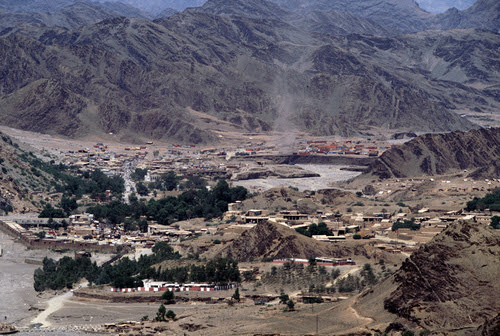
The Khyber Pass Connection: More Than Just a Backdrop
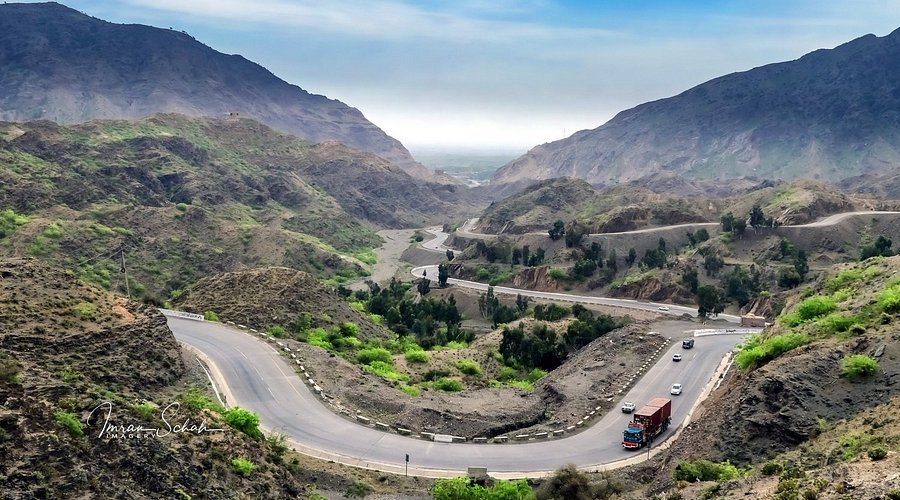
To understand why this tree matters, you need to understand where it stands. The Khyber Pass isn’t just any old mountain passage. It’s one of the most strategically important routes in human history, connecting the Indian subcontinent to Central Asia.
For centuries, armies, traders, and conquerors have marched through this narrow corridor. Alexander the Great passed through it. The Mongols thundered across it. And during British rule, it became a critical point of control for an empire desperate to maintain its grip on India while keeping an eye on Russian expansion to the north.
The British established a heavy military presence in the region, building cantonments and fortifications. Landi Kotal was one of these strategic outposts, a place where soldiers dealt with harsh conditions, tribal resistance, and the constant pressure of maintaining imperial order in a deeply unwelcoming environment.
In this context, the arrested tree becomes even more symbolic. Here was an officer in one of the most challenging postings of the British Empire, surrounded by real threats and genuine strategic concerns, and he chose to arrest a tree. It’s the kind of misplaced priority that would be funny if it weren’t so revealing about the mindset of colonial administration.
Colonial Logic: When Ego Outweighs Oxygen
This wasn’t just a drunk officer being ridiculous. Well, okay, it was mostly that.
But it also speaks to the twisted logic of colonial rule. When a tree could be arrested just because it stood in the way of a man with a mustache and too much power, it wasn’t really about the tree. It was about dominance.
If you think about it, colonialism wasn’t just about land or resources. It was about control. Down to the level of plants. Crops were regulated, their cultivation dictated by market demands thousands of miles away. Forests were surveyed, categorized, and monetized, with local communities often losing traditional access to resources they’d used for generations. And in this bizarre case, an uncooperative tree became a minor act of rebellion.
The British Raj operated on a principle of total authority. Everything and everyone existed within a hierarchy that placed British officers at the top. Local customs, natural landscapes, even the movement of wildlife could be subject to regulation and control. The Forest Acts of the late 1800s gave the colonial government sweeping powers over wooded areas, often displacing indigenous peoples and disrupting ecosystems that had existed for millennia.
In this environment, arresting a tree isn’t quite as random as it first appears. It’s an extension of a worldview that saw nature itself as something to be dominated, cataloged, and bent to imperial will. The tree’s crime wasn’t blocking a road. Its crime was existing outside the neat categories and controlled spaces that colonial administrators tried to impose on every aspect of life in their territories.
Maybe that’s why the story still resonates. Because the tree didn’t bend. It didn’t bow. It didn’t apologize. It just stood there, quietly refusing to care.
Local Legend and Tourist Draw
For the people living near Landi Kotal, the arrested tree isn’t just a curiosity but it’s a point of local pride. In a region that has seen more than its share of conflict and hardship, the tree represents continuity and resilience. It’s also become something of a tourist attraction, though getting to see it requires navigating the security protocols of an active military cantonment.
Visitors who do make the journey often describe the experience as surreal. There’s something deeply strange about standing in front of a chained tree, reading a plaque that explains its “crime,” and realizing that this absurd situation has been maintained for over 12 decades. Some find it hilarious. Others find it sobering. Most find it a bit of both.
Local guides love telling the story, often embellishing details or adding colorful anecdotes about the officer’s reported drunkenness. Whether all these details are historically accurate is debatable (colonial record-keeping wasn’t exactly thorough when it came to embarrassing incidents), but the core truth remains: a tree was arrested, and it’s still serving time.
What Other Strange Colonial Tales Tell Us
The arrested tree isn’t alone in the annals of bizarre colonial decisions. History is littered with similarly absurd examples of imperial overreach and misplaced priorities.
In India, there are accounts of British officials holding elaborate trials for animals, including a famous case where a dog was tried for biting a colonial officer. In Australia, there are stories of administrators attempting to regulate the flight patterns of native birds. In Africa, colonial powers drew borders with rulers and straight lines, creating nations that made sense on paper but ignored centuries of ethnic, cultural, and geographic realities.
These stories share a common thread: they reveal how detached colonial powers often were from the realities of the places they controlled. When you’re governing from a position of assumed superiority, backed by military force and bureaucratic machinery, it becomes easy to lose perspective. A tree becomes an offender. A river becomes a possession. An entire culture becomes something to be managed and “civilized.”
The arrested tree, in its quiet way, exposes this disconnect. It shows us that colonial power, for all its military might and administrative complexity, could be rendered absurd by something as simple as a plant that refused to move.
The Payoff: What This Tree Can Teach Us
Why should we care about a chain-wrapped acacia in Pakistan?
Because in its quiet absurdity, the story says a lot. It reminds us how bizarre history can be. How power makes people do laughably stupid things. And how sometimes, resistance can look like just standing your ground.
Literally.
In our current era, where we’re still grappling with the legacies of colonialism and the ongoing impacts of imperial systems, the arrested tree serves as an accessible entry point for bigger conversations. It’s easier to laugh at a drunk officer arresting a tree than to confront the systematic oppression and exploitation that characterized colonial rule. But once you’re laughing, once you’re engaged with the story, it opens doors to deeper understanding.
The tree also reminds us about the power of simply enduring. In a world that often demands loud protest and active resistance, there’s something to be said for the quiet defiance of continued existence. The tree didn’t organize. It didn’t protest. It didn’t write manifestos. It just kept living, kept growing, kept being a tree. And somehow, that was enough to turn an act of colonial pettiness into a lasting symbol of imperial absurdity.
In a way, the arrested tree has outlived its oppressor. The officer who ordered its arrest is long dead, his name barely remembered. The empire he represented has crumbled. But the tree? It’s become a local legend. A meme before memes existed. A botanical middle finger to arrogance. And honestly? I kind of love that.
Visiting the Tree Today
For those curious about seeing the arrested tree in person, be aware that it’s not the easiest destination to reach. Landi Kotal is in the Khyber Pakhtunkhwa province of Pakistan, close to the Afghan border, and the area has security considerations that make casual tourism challenging.
The military cantonment requires special permission for visitors, and foreign tourists typically need to arrange access through official channels. However, for those who do make the journey, the experience is reportedly worth the effort. Standing in front of the chained acacia, feeling the dry heat of the Khyber Pass, and contemplating over a century of history captured in iron and wood creates a connection to the past that few historical sites can match.
Photography is generally allowed, though visitors should follow all instructions from military personnel regarding where they can and cannot go within the cantonment. The tree itself is well-maintained, with the area around it kept clear and the commemorative plaque regularly updated.
Final Thought: The Best Kind of Prisoner
Some monuments are built with intention, designed to commemorate great events or honor important figures. Some emerge organically from the collective memory of a community. And some, like the arrested tree of Landi Kotal, are just minding their own business when a uniformed human decides they’re a threat.
But time has a way of sorting out the foolish from the legendary. The grand monuments to colonial governors have often been torn down or forgotten. The elaborate administrative structures of empire have collapsed. Yet this tree, arrested in a moment of drunken pique, has become something more enduring than any statue or palace.
It stands as a reminder that history isn’t just made by the powerful, even when they think they’re the ones writing all the rules. Sometimes, history is made by the things that refuse to move, refuse to comply, refuse to acknowledge that they’re supposed to be impressed by uniforms and authority.
So if you’re ever near the Khyber Pass and you see a chained tree standing in the sun, give it a nod. That thing’s doing life for a crime it didn’t commit. And somehow, after more than 125 years of captivity, it makes the rest of us feel a little freer.
Because in the end, the tree won. It outlasted the empire. It outlived the joke. It turned an act of petty tyranny into a story that makes people smile and think. Not bad for a prisoner who never even got a trial.
Sources:
1. BBC News: The Tree That Was Arrested
2. Dawn: The Curious Case of the Chained Tree
3. Atlas Obscura – The Arrested Tree