There’s a wooden ladder in Jerusalem that hasn’t moved in over 270 years. Not because it’s sacred. Not because it’s forgotten. But because moving it could spark international outrage, maybe even violence.
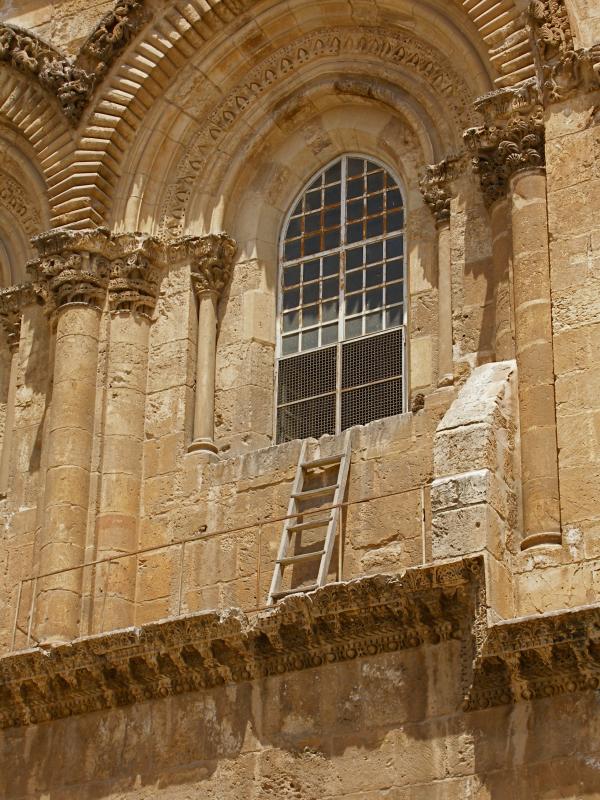
Yes, a ladder. Made from Lebanon cedar. Only five or six rungs depending on who’s counting. Leaning beneath a window of the Church of the Holy Sepulchre. It’s been called the “Immovable Ladder” and its story is as tangled and tense as the history of Jerusalem itself.
A Petty Object in a Holy Place
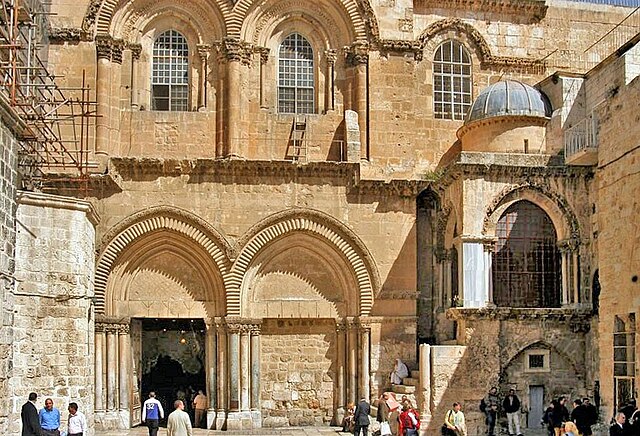
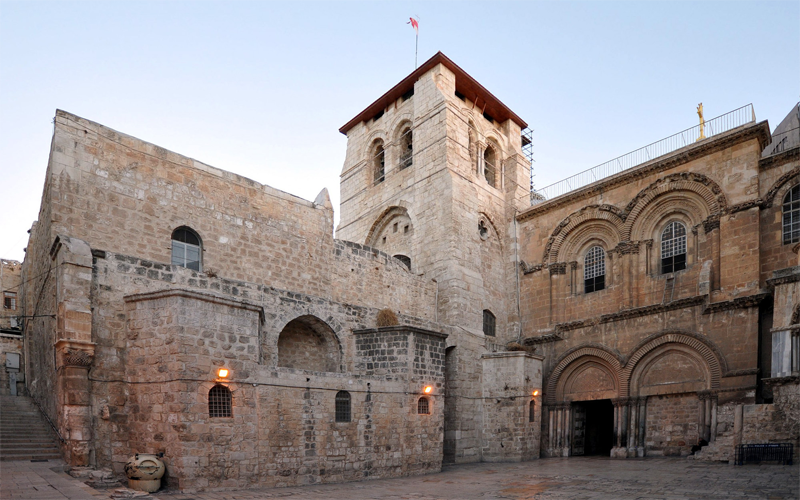
If you’ve ever visited the Church of the Holy Sepulchre, you might’ve walked right past it without knowing. A basic wooden ladder perched awkwardly on a stone ledge beneath a second-story window, just above the church’s main entrance. No plaque. No rope barrier. No explanation posted for confused tourists.
It just sits there. Weathered by centuries of sun, rain, and Jerusalem’s notorious dust storms. The wood has grayed with age. Some rungs show signs of repair or replacement over the years, though even those repairs are now old. It looks like someone meant to come back for it and never did.
But that ladder is a relic from the 1700s, and its immobility is the result of a bizarre, centuries-old agreement called the “Status Quo,” created to stop Christian denominations from literally brawling in the holiest site in Christianity.
The Church That Everyone Owns and No One Controls
The Church of the Holy Sepulchre is built on the site where many Christians believe Jesus was crucified, buried, and resurrected. Emperor Constantine ordered its construction in the 4th century after his mother, Helena, supposedly identified the location during a pilgrimage. For nearly 1,700 years, it’s been the ultimate destination for Christian pilgrims, the culmination of a spiritual journey.
Naturally, it’s a pretty popular piece of real estate. The problem is that six different Christian denominations share the church: the Greek Orthodox, Roman Catholics (known as the Latin Church), Armenian Apostolic, Coptic Orthodox, Ethiopian Orthodox, and Syriac Orthodox. And they don’t always play nice.
In fact, fights still break out. There are YouTube videos from 2008 showing monks and priests from different denominations literally throwing punches over cleaning duties or who gets to walk where. Eleven people were hospitalized after a fight that started because a Coptic monk moved his chair 20 centimeters into the shade on a hot day. Twenty centimeters. About eight inches. That’s all it took.
Christians Fighting Over Everything
It sounds absurd, but the tensions run deep. These aren’t just petty squabbles. They’re rooted in centuries of theological disputes, political maneuvering, and genuine belief that each denomination is the true guardian of Christianity’s most sacred site.
The split between Catholic and Orthodox churches goes back to 1054 CE. That schism created competing claims to Christian holy sites. When Crusaders from Western Europe conquered Jerusalem in 1099, they gave control of the church to the Catholic Franciscans. When the Crusader kingdoms fell and the Ottoman Empire took over, the balance of power shifted repeatedly.
The Ottoman Solution
By the 18th century, the situation had become intolerable. Different Christian groups were bribing Ottoman officials to get favorable decrees. They were sabotaging each other’s ceremonies. Violence was common. The Ottoman Sultan, who controlled Jerusalem at the time, was tired of refereeing what he saw as ridiculous disputes between people who all supposedly worshipped the same God.
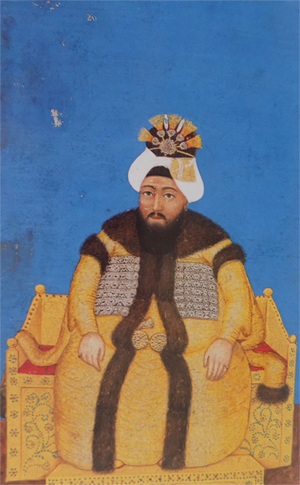
So back in 1757, Sultan Osman III issued a decree that essentially froze everything in place. The Status Quo, as it became known, assigned specific rights and responsibilities to each denomination. Every inch of the church was mapped and allocated. Every ceremony was scheduled. Every cleaning duty was specified.
Most importantly, nothing in the church could be changed without the unanimous agreement of all parties involved. Not the placement of furniture. Not the timing of services. Not even the position of a ladder.
This decree was reaffirmed in 1852 and 1853 by Sultan Abdülmecid I, and it became part of international law through the Treaty of Paris in 1856 following the Crimean War. Yes, disputes over this church were actually one of the factors that contributed to a major European war. The Status Quo isn’t just a local agreement. It’s internationally recognized and still legally binding today.
So Why the Heck Is the Ladder Still There?
No one knows exactly who put the ladder there or when, though the first documented evidence appears in an engraving from 1728 by a Franciscan friar named Elzear Horn. That means it’s been there for at least 296 years, possibly longer.
There are several theories about its original purpose. Some say it was used by Armenian monks to access the ledge beneath the window, which served as a small balcony where they could get fresh air and sunlight. Apparently, they even grew vegetables on that ledge at one point. The ladder gave them a way to reach their territory without stepping through space controlled by other denominations.
Avoiding the Ottoman Tax
Another theory suggests the ladder was placed there during a period when the Ottoman Empire taxed Christian clergy every time they entered or exited the church. The Catholics adapted by essentially living inside the church to avoid the fees. The ladder may have provided a way for certain monks to come and go without using the main entrance.
A third possibility is that it simply belonged to a mason who was doing repair work and left it behind when the job was done. Then, because of the Status Quo agreement, no one had the authority to move it.
The ladder itself belongs to the Armenian Apostolic Church, since Armenians control the window and the ledge it rests on. But here’s where it gets complicated: while they own the ladder and the space, they can’t move it without the consent of all five other denominations. And guess what? They rarely agree on anything.
The Weight of Symbolism
Once it was there, the ladder became part of the Status Quo. And because no one can agree on who should move it, where it should go, or what moving it would signify, it stays. Any change could be interpreted as one denomination gaining advantage over the others. So the ladder remains, locked in place by mutual suspicion and centuries of accumulated grievances.
Yes, it’s absurd. And yet, kind of poetic? This simple wooden object has outlasted empires, survived wars, and witnessed the transformation of Jerusalem from Ottoman territory to British Mandate to Jordanian control to Israeli sovereignty. Through all of that, the ladder hasn’t budged.
The Times It Actually Moved
Despite its nickname, the Immovable Ladder has actually been moved a few times, though always temporarily and never officially.
In 1997, someone reportedly moved the ladder as a prank or protest. There was immediate uproar. The ladder was quickly returned to its exact position. No one claimed responsibility, and the denominations agreed to forget the incident happened.
In 2009, it happened again. The ladder briefly disappeared, causing panic among church officials. When it was returned, there were demands for increased security. The fact that a simple wooden ladder could cause such concern tells you everything you need to know about the tensions at play.
Pope Paul VI, during his historic pilgrimage to Jerusalem in 1964, specifically pointed to the ladder as a visible symbol of Christian disunity. He used it in his appeals for the different churches to reconcile their differences. The fact that he had to use a ladder as his example speaks volumes about how intractable the situation had become.
A Ladder Becomes a Mirror
The ladder’s become more than an accident of history. It’s a symbol. A metaphor. An awkward, slightly ridiculous reminder of how fragile peace can be. Of how ancient grudges can calcify into tradition. Of how even the holiest places aren’t immune to human ego, pettiness, and the need to be right.
It’s also a quiet critique of religion itself: that in the pursuit of the divine, we sometimes lose sight of basic human compassion. That bureaucracy can outlive meaning. That rules designed to prevent conflict can sometimes perpetuate it instead.
Different Ways of Seeing
Some visitors see the ladder and laugh at the absurdity. A centuries-old standoff over a piece of wood? It seems ridiculous. Others see it and feel sad, viewing it as evidence of Christianity’s broken unity. These denominations, all followers of Jesus, can’t even agree on moving a ladder.
But there’s another way to see it. The ladder represents a kind of negative peace, the absence of violence rather than the presence of harmony. Without the Status Quo, the disputes would be far worse. The ladder stays in place because all six denominations have reluctantly agreed to maintain the existing balance. They may not like each other, but they’ve found a way to coexist.
It’s not ideal. It’s not what anyone would design if they were starting fresh. But it works, more or less, and in Jerusalem, that’s actually an achievement.
The Muslim Keyholders
Here’s another strange detail: the main entrance to the Church of the Holy Sepulchre isn’t controlled by any of the Christian denominations. The key has been held by a Muslim family, the Nusseibeh clan, since the 12th century.
When Saladin conquered Jerusalem in 1187, he recognized that Christian control of the church’s keys would only lead to more fighting. So he entrusted them to a neutral Muslim family, who would open and close the doors without favoring any particular Christian group.
That tradition continues today. Every morning, a member of the Nusseibeh family unlocks the heavy wooden doors. Every evening, they lock them again. It’s one of Jerusalem’s most enduring interfaith collaborations, born out of necessity and maintained through trust.
The ladder and the Muslim keyholders are both solutions to the same problem: how do you manage a sacred space claimed by people who can’t agree on anything?
What Happens to Sacred Spaces When No One Can Agree
The Status Quo has consequences beyond just frozen ladders. The Church of the Holy Sepulchre is actually in a state of slow decay because major renovations require unanimous consent, which is nearly impossible to achieve.
There are structural issues that need addressing. Modern fire safety standards aren’t being met. Electrical systems are outdated. But making these improvements would mean deciding which denomination pays for what, who controls which workers, and whether any changes alter the existing balance of power.
So the church deteriorates, slowly, because fixing it is too complicated. The Status Quo, designed to preserve peace, has also preserved problems that should have been solved decades ago.
When Every Detail Matters
Everything in the church is contested territory. There are areas where only certain denominations can walk during specific hours. There are stones on the floor that mark invisible boundaries. There are schedules for who can light which candles and when.
Ceremonies are timed down to the minute. If one denomination’s procession runs long, it’s seen as an encroachment on another’s time. Cleaning duties are assigned and jealously guarded. Even sweeping the floor in the wrong place at the wrong time can cause diplomatic incidents.
It’s exhausting to think about. But for the priests and monks who live and work there, it’s daily reality. They’ve learned to navigate this complex web of rules and relationships, knowing that one misstep could reignite centuries-old conflicts.
Final Thought: A Riddle in Plain Sight
Every day, thousands of tourists snap photos of the Church of the Holy Sepulchre. They marvel at the ornate ceilings, the candlelight, the ancient stones worn smooth by millions of pilgrim feet. They visit the spot where Jesus was supposedly crucified. They touch the stone where his body was prepared for burial. They queue to enter the tiny chapel that houses the tomb.
But that little wooden ladder on the outside? Most people don’t even notice it. Those who do probably assume it’s there for maintenance work, that someone will come collect it later.
It might be the most honest artifact there. It doesn’t perform miracles. It doesn’t mark a holy spot. It doesn’t promise salvation or healing. It just waits, weathering slowly, accumulating stories.
And in its waiting, it tells a story more powerful than any sermon. It tells the truth about human nature, about our capacity for both petty stubbornness and patient endurance. It reminds us that the sacred and the ridiculous often coexist in the same space, and that sometimes the most profound symbols are the ones we never intended to create.
The Ladder That Teaches Without Speaking
The Immovable Ladder is a test. It asks: can we laugh at ourselves? Can we acknowledge that our disputes, viewed from enough distance, look absurd? Can we hold space for both the importance of tradition and the silliness of never moving a ladder?
It’s a reminder that religious devotion doesn’t automatically make people better. That proximity to the sacred doesn’t prevent pettiness. That even in Christianity’s most important church, human frailty is on full display.
But maybe that’s okay. Maybe the ladder is there to teach us that faith is messy, that communities struggle, that peace is complicated and imperfect and often achieved through strange compromises rather than grand gestures.
The ladder has survived this long because nobody moves it. But it also survives because everybody agrees not to. That agreement, reluctant and imperfect as it is, represents a kind of miracle. Not the flashy kind that draws pilgrims. The everyday kind that keeps fragile peace intact, one day at a time.
And so the ladder waits. Above the crowds. Below the window. Suspended between earth and sky, between past and present, between the profound and the absurd. Exactly where it’s been for nearly three centuries. Exactly where it will probably stay for centuries more.
Unless, of course, all six denominations finally agree to move it. Don’t hold your breath.
Sources:
1. Smithsonian Magazine: The Immovable Ladder
2. National Geographic: Secrets of the Church of the Holy Sepulchre
3. BBC: Why This Ladder Hasn’t Moved in Centuries