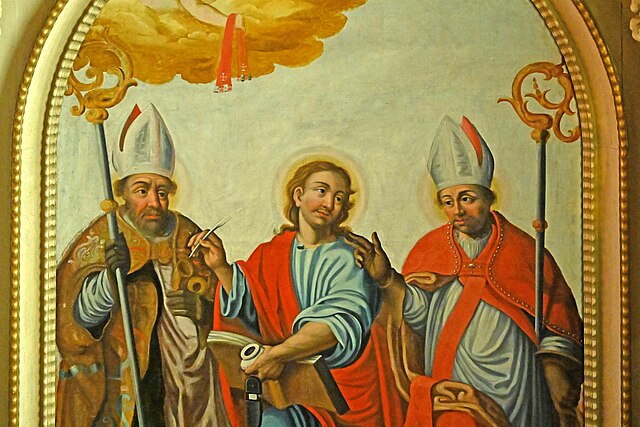
Imagine a Monk Telling You to Drink Beer… for Your Health
Picture it: Europe, around the 11th century. Water? Dubious. Bubbling with bacteria and sometimes literal sewage. Disease? Constant. Bathing? Occasional. And in the middle of this, a monk named Arnold stands up and says something that sounds like divine common sense: “Don’t drink the water. Drink beer.”
And people listened.
Saint Arnold of Soissons, now the patron saint of brewers, made his mark not just through piety, but through hops and barley. His story is half history, half legend, and 100 percent proof that sometimes, beer really is the answer.
The Brew That Saved Lives
Let’s pause for a second and think about what beer was back then. It wasn’t the ice-cold IPA you sip after work. Medieval beer was thick, yeasty, low in alcohol (usually around 2-3%), and incredibly important. It was safer than water, provided calories, and was often brewed at home or in monasteries. It was also boiled, which, unbeknownst to anyone back then, killed dangerous bacteria.
Arnold, who lived in what’s now Belgium, saw what was happening. People were dying from waterborne diseases like cholera, typhoid, and dysentery. Rivers that doubled as sewers. Wells contaminated by animal waste. Springs that looked clear but carried invisible death. The concept of germ theory wouldn’t exist for another 800 years, but Arnold could see the pattern: people who drank water got sick. People who drank beer stayed healthier.
So he preached it: drink beer, not water. At one point, during a particularly nasty outbreak in the region around Oudenburg (in modern-day Belgium), he reportedly led villagers to the monastery brewery and told them to drink nothing but his beer. Miraculously, they survived while neighboring villages were devastated.
Coincidence? Maybe. But the legend stuck. And so did Arnold.
Medieval Europe’s Water Crisis
To understand why Arnold’s advice was so revolutionary, you need to understand just how dangerous water was in medieval Europe. Cities were growing rapidly, but infrastructure wasn’t keeping pace. Waste disposal meant throwing chamber pots into the street or directly into rivers. The same rivers people used for drinking water.
London’s Thames was essentially an open sewer. Paris’s Seine wasn’t much better. Even small villages faced contamination issues when wells were dug too close to livestock pens or human waste pits. The link between dirty water and disease wasn’t understood, but the consequences were obvious and deadly.
Outbreaks could wipe out entire communities. Cholera, which causes severe dehydration through vomiting and diarrhea, killed quickly and without mercy. Typhoid fever brought weeks of suffering, high fever, and often death. Dysentery was so common it was just considered a normal part of life, even though it regularly killed children and weakened adults.
Into this nightmare stumbled the accidental solution: beer. The brewing process required boiling water, which killed the pathogens. The fermentation process created an environment where harmful bacteria couldn’t survive. The low alcohol content (beer was deliberately kept weak so people could drink it all day) provided some additional antimicrobial properties. And the grain provided nutrients that contaminated water obviously lacked.
Nobody understood why it worked. They just knew that it did.
The Monastery Brewing Tradition
Arnold wasn’t brewing in isolation. Medieval monasteries were the pharmaceutical companies of their time, centers of learning, medicine, and practical knowledge. Monks preserved ancient texts, conducted agricultural experiments, and yes, brewed absolutely massive quantities of beer.
Why monasteries? Several reasons. First, monks needed beer for themselves. The Rule of Saint Benedict, which governed monastic life, allowed for a daily ration of wine or beer. In northern Europe where grapes didn’t grow well, beer became the standard. Monks doing hard labor in fields needed calories and hydration, and beer provided both.
Second, monasteries hosted travelers. Medieval hospitality demanded you feed and house pilgrims and visitors. Offering them contaminated water would be both inhospitable and potentially murderous. Beer was the safe choice.
Third, beer could be sold or traded. Monasteries needed income to maintain their operations and support the poor. Quality monastery beer became a valuable commodity. Some Belgian monasteries that started brewing in the Middle Ages are still producing beer today, following recipes that are centuries old.
The monks became experts. They experimented with ingredients, refined techniques, and kept detailed records. They added hops, which weren’t common in early medieval beer but became standard by Arnold’s time, both for flavor and for their natural preservative qualities. They controlled fermentation temperatures. They maintained cleanliness in their brewhouses long before anyone understood why cleanliness mattered.
Arnold, as the abbot of a monastery, would have overseen this entire operation. He wasn’t just blessing the beer. He was managing production, ensuring quality, and making strategic decisions about a resource that literally kept people alive.
From Monk to Myth to Saint
Arnold wasn’t some brew-loving party priest. He was an abbot, deeply spiritual, deeply respected. Born around 1040 to a noble family, he served as a soldier in his youth before experiencing a spiritual calling. He entered monastic life and quickly rose through the ranks due to his intelligence, administrative skills, and genuine piety.
He became the abbot of the Abbey of Saint Peter in Oudenburg around 1080. It was a position of significant responsibility. He managed the monastery’s lands, supervised the monks, maintained relationships with local nobles and Church authorities, and provided spiritual leadership to the surrounding community.
He didn’t push beer to get everyone tipsy. He saw it as a form of stewardship. If God gave grain, and grain could save lives, then why not use it? This was practical theology at its finest, faith expressed through solving real problems.
After his death around 1087, his cult grew (as medieval fan bases tended to do). Miracles were attributed to him. Beer-related miracles, of course. One story tells of his barrel never running dry during a pilgrimage when he was transporting beer to another monastery. Another has him blessing beer kettles during an epidemic, with those who drank the blessed beer surviving while others perished.
The most famous miracle story involves a brewing kettle at his monastery. According to legend, the kettle could produce enough beer to satisfy any number of people who came seeking it, no matter how many arrived. During times of plague or famine, desperate villagers would trek to the monastery, and somehow, there was always enough beer to go around.
Eventually, the Church gave him full sainthood status. He was canonized in 1120, just 33 years after his death, which is remarkably fast by medieval standards. Usually, the process took much longer. His rapid elevation suggests his impact was both widespread and well-documented.
The Science They Didn’t Know They Were Using
Here’s what makes Arnold’s story so fascinating from a modern perspective: he was right for reasons he couldn’t possibly understand.
The brewing process kills pathogens through boiling. The water used in beer reaches temperatures well above what bacteria and parasites can survive. Even though medieval brewers didn’t know about bacteria, they were effectively pasteurizing their water centuries before Louis Pasteur figured out the process.
Fermentation creates an environment hostile to most harmful microorganisms. The yeast that turns grain sugars into alcohol also produces acids that lower the pH of the liquid. Most pathogens that make humans sick prefer neutral pH environments. They can’t survive in beer.
Hops, which became standard in European brewing around Arnold’s time, have natural antibacterial properties. They help preserve beer and prevent spoilage. Medieval brewers knew hops kept beer fresh longer, but they didn’t know it was because hops inhibit bacterial growth.
Even the low alcohol content helped. While 2-3% alcohol isn’t enough to kill everything, it provides some antimicrobial effect. Combined with the boiling, fermentation, and hops, you’ve got a multi-layered defense against waterborne illness.
Arnold observed the results without understanding the mechanism. He was practicing empirical medicine, seeing what worked and recommending it, even though the theoretical framework to explain his observations wouldn’t exist for centuries. In a way, that makes his achievement even more impressive. He trusted his observations over conventional wisdom.
Beer with a Side of Faith
What I love about Arnold’s story is that it straddles the line between the practical and the spiritual. He wasn’t anti-science (for his time). He wasn’t detached from reality. He saw what worked, and he wove it into faith. That’s rare.
Medieval Christianity often gets portrayed as superstitious and backward, hostile to practical knowledge. But Arnold represents a different strand of medieval thought, one that saw investigating God’s creation and solving practical problems as forms of worship. If God gave humans grain and yeast and the intelligence to brew, then using those gifts to save lives was holy work.
This practical mysticism shows up in other medieval saints too. Saint Hildegard of Bingen wrote extensively about medicine and herbs while also having mystical visions. Saint Albert the Great was both a theologian and one of the most accomplished naturalists of his time. These weren’t people who saw faith and practical knowledge as opposed. They saw them as complementary.
Arnold’s beer ministry exemplifies this integration. Prayer and fermentation. Spiritual guidance and brewing expertise. Miracles and practical public health. For him and his contemporaries, these weren’t contradictions. They were different expressions of the same calling to serve others and honor God.
He’s Not the Only Beer Saint
Arnold might be the most famous brewing saint, but he’s not alone. Medieval Christianity had a surprising number of beer-adjacent holy figures.
Saint Brigid of Ireland reportedly turned bathwater into beer for lepers, which is simultaneously miraculous and deeply practical (lepers needed nutrition and safe drinking liquid). Another legend says she once multiplied a small amount of beer to satisfy a large group of thirsty visitors, similar to the loaves and fishes but with more hops.
Saint Gambrinus is basically the unofficial god of beer, though he’s probably entirely mythical. Various legends make him either a Flemish king who learned brewing from the devil or a corruption of Jan Primus (John the First), a medieval duke. Either way, his image shows up on beer labels and brewery signs across Europe.
Saint Adrian of Nicomedia somehow became associated with brewing despite being a 4th-century martyr who had nothing to do with beer in his lifetime. But medieval brewers adopted him as a patron saint anyway, possibly because his feast day fell during a traditional brewing season.
But Arnold? Arnold’s the real deal. He brewed to heal. He preached fermentation for survival. His connection to brewing wasn’t accidental or symbolic. It was central to his life’s work and his lasting impact.
Still Toasted Today
Today, breweries across Europe and America still honor him. You’ll find his name on bottles, in toasts, and even in the names of brewing companies (shoutout to Saint Arnold Brewing Co. in Texas, which has been crafting quality beer since 1994). His feast day, July 14th, is basically beer Christmas if you’re into the saintly side of brewing.
Belgian breweries, particularly Trappist and Abbey breweries, maintain traditions that stretch back to Arnold’s time. The beer styles they produce, like dubbel, tripel, and quadrupel, evolved from centuries of monastic brewing expertise. When you drink a Belgian abbey ale, you’re tasting a living tradition that Arnold helped establish.
The annual blessing of the beer in Belgium involves priests blessing new batches of brew, asking for protection from spoilage and for the beer to bring health to those who drink it. It’s a tradition that directly echoes Arnold’s own practice of blessing monastery beer.
Brewers’ guilds across Europe celebrate Arnold’s feast day with festivals, special beer releases, and ceremonies that honor his memory. In some German and Belgian towns, there are processions, brewery tours, and communal tastings that turn his feast day into a multi-day celebration.
What Arnold Teaches Us About Public Health
Strip away the miracles and medieval trappings, and Arnold’s story is fundamentally about public health innovation. He identified a major health crisis, found a practical solution, and convinced people to adopt it. That’s harder than it sounds.
Think about it. He was asking people to change a fundamental behavior. Drinking water was normal, traditional, and free. Beer required resources, time, and equipment to produce. He had to convince people that the extra effort was worth it, that the old way was actually killing them, and that his solution would work.
He succeeded where many public health initiatives fail. He made the healthy choice the easy choice by producing beer at his monastery and distributing it. He gave people a compelling narrative (divine blessing plus practical benefit) that motivated behavior change. He led by example, with his entire monastery community drinking beer instead of water.
Modern public health campaigns could learn from his approach. Don’t just tell people what to do. Provide the resources to do it. Don’t just cite statistics. Tell a story that resonates. Don’t just issue proclamations from authority. Demonstrate the solution in your own life.
The Dark Side: When Medicine Becomes Excess
Of course, we should acknowledge that medieval beer culture wasn’t all positive. When your society tells everyone, including children, to drink beer all day instead of water, you’re going to have consequences.
Alcoholism was a recognized problem in medieval Europe. Drunkenness was regularly condemned in sermons and in civil laws. While the beer was weaker than modern brews, drinking it continuously throughout the day still meant consuming significant amounts of alcohol. Some people definitely struggled with dependence.
The Church’s relationship with alcohol was complicated. Wine and beer were sacramental, medicinal, and necessary. But drunkenness was sinful. Moderation was preached even as daily consumption was encouraged. Arnold himself would have drawn this distinction, promoting beer as medicine and nutrition while condemning excess.
It’s also worth noting that beer culture reinforced social hierarchies. Better beer went to nobles and clergy. Lower classes got thinner, weaker beer. In monasteries, the abbot drank the good stuff while novices got the dregs. Even a lifesaving public health intervention reflected the inequalities of its time.
Final Thoughts: The Saint With a Practical Solution
And honestly? In a world still obsessed with wellness fads and health gurus, there’s something refreshing about a thousand-year-old monk who just said: “Have a beer. It’s probably safer.”
Arnold’s story resonates because it’s fundamentally human. He saw people suffering. He found something that helped. He shared it widely. He didn’t overcomplicate it or wrap it in unnecessary mysticism (well, not too much). He just offered a practical solution to a real problem.
In our current era of complicated health advice, conflicting studies, and wellness influencers selling expensive supplements, there’s something almost revolutionary about Arnold’s straightforward approach. The water is making you sick. This beverage won’t. Problem solved.
Of course, we shouldn’t take his advice literally today. Modern water treatment has solved the problems Arnold was addressing. Drinking beer all day instead of water would create more health problems than it solves. But the principle behind his approach, observe what works, trust your observations, share solutions that help people, remains valuable.
So next time you raise a glass, maybe spare a thought for Saint Arnold of Soissons. The monk who saw a public health crisis, grabbed some grain and yeast, and literally brewed his way to sainthood.
He proved that sometimes, the most holy thing you can do is the most practical thing. And that’s worth drinking to.
Sources:
1. Catholic Online: https://www.catholic.org/saints/saint.php?saint_id=337
2. Beer & Brewing Magazine: “Saint Arnold of Soissons” https://beerandbrewing.com/saint-arnold-of-soissons-the-patron-saint-of-brewers/
3. Smithsonian Magazine: “The Saint Who Said Beer Was Safer Than Water” https://www.smithsonianmag.com/history/saint-who-said-beer-was-safer-water-180976004/